We tend to associate Coca-Cola with Christmas. Fanta has been working to make Halloween its own. Its latest attempt, though, drew criticism online and gave marketing teams something to think about in their use of AI.
At WhatCat. Studio, we sat down to look at “Fanta’s Haunted Universe” and discuss why an idea that sounded good on paper became an example of where AI can go wrong.
For Halloween, Fanta used classic horror characters: vampires, werewolves and Frankenstein’s monster. So far, so good. The problem was in the execution. The trailer felt like “AI slop”, a term for AI-generated content that seems careless, generic and lacking in artistic value.
When the work doesn’t fit the brand
One of the main problems for us was the clash with Fanta’s visual identity. When we picture Fanta, we think of a playful, youthful, colourful brand, with something of a comic-book or vintage feel. Its previous campaigns and social content, including TikTok and Instagram videos, reflect that.
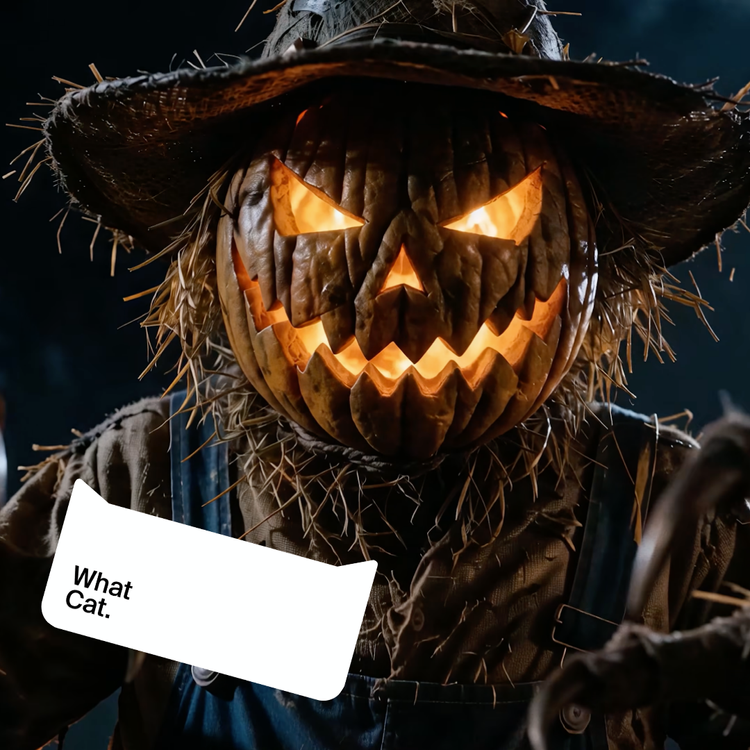
The AI-generated trailer, however, used a hyperrealistic look that felt closer to a generic 3D game trailer. When the tool decides the look instead of the brand’s identity, the connection with the audience can get lost.
The AI slop trap
We know AI can be a useful creative tool. Here, though, the campaign seemed to follow the most basic image-generation formula: a standard handsome vampire, a generic werewolf, a predictable monster. Rather than using AI as a starting point for an artistic interpretation, the result lacked the human direction and thinking that turn a prompt into a useful piece of communication.
Audiences are visually aware and notice when a brand takes the easy route. The video came across as lacking effort.
What creative teams can take from it
AI needs to serve the idea. Without a clear concept and art direction, the tool can simply add more disposable content to the internet.
Keep the brand’s identity in view. No matter how advanced the technology, visuals that don’t fit the brand’s character and tone can lose the message.
AI isn’t the enemy, but it isn’t a shortcut past the work of developing and directing a campaign either. AI slop happens when the tool is left without direction. At WhatCat. Studio, we believe technology should support human design, rather than replace it with generic formulas.