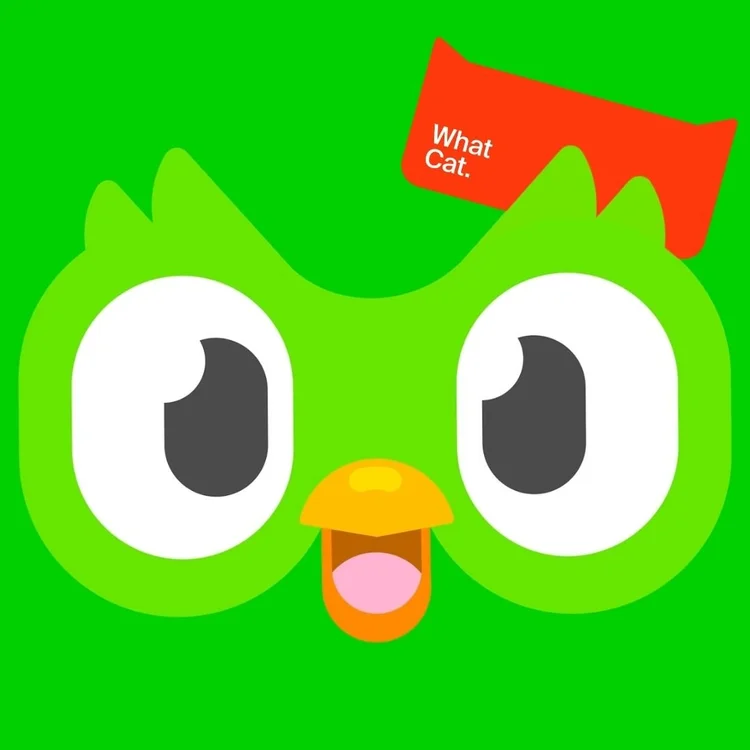
For years, Duolingo has been a reference for brands succeeding online through entertainment. Its mascot, Duo, became a TikTok icon with a mix of roughly eighty per cent chaos and twenty per cent wholesome content. From its obsession with Dua Lipa to unfiltered exchanges with other brands, Duolingo showed that a human personality could pay off.
Now the approach is changing. Based on our team discussion, we looked at the brand’s perception problem and its attempts to work around TikTok’s algorithm to recover its image.
The AI-first backlash: when automation changed the human side
The recent loss of users and frustration with Duolingo stem from perceptions of the brand, rather than its educational app alone. After announcing an AI-first approach, the company replaced much of its design and illustration team with AI. People criticised the change because they felt the brand was losing its authenticity.
The change brought a strong backlash on social media and calls for boycotts, giving competing language platforms an opening. For us, the lesson is that AI can help internal processes, but people notice when it replaces the visible human work they connected with.
From a disruptive mascot to burner accounts: a different TikTok approach
One factor in the change is that the creative person behind Duo’s chaotic personality is no longer with the company. Without that original perspective, and with the company concerned about a broader backlash, Duolingo is moving towards something more controlled, predictable and restrained.
To adapt to TikTok’s algorithm, Duolingo is trying an unusual tactic:
Burner accounts: rather than keeping all the content on Duo’s main profile, it is working with influencers to create alternative accounts dedicated to talking about the app.
The aim of these anonymous or secondary accounts is to make paid content look like ordinary interactions and distribute it without the average viewer recognising it as advertising.
It may make commercial sense as a way to reach more people, but online audiences are perceptive. They notice when an influencer’s content is overproduced, paid for and missing the personality that made the brand popular.
Growing up, or remembering who the brand is?
The concern isn’t only the influencer approach, though we aren’t especially keen on it. It’s the move away from Duo’s chaotic, distinctive personality. It raises several questions for marketing teams:
The risk of playing it safe: predictable, traditional influencer campaigns can make a brand look generic among countless similar ads.
AI doesn’t build community on its own: replacing human-made visuals in the app and its content can make the experience feel distant to loyal users.
Some brands don’t need to grow more serious. They need to remember what made people like them. Growth doesn’t always mean complicated algorithm tactics; it can mean keeping the traits that first drew the audience in.
Time will tell whether burner accounts and automation help Duolingo’s numbers, or weaken the identity built by a chaotic green owl that wasn’t afraid to make itself heard.